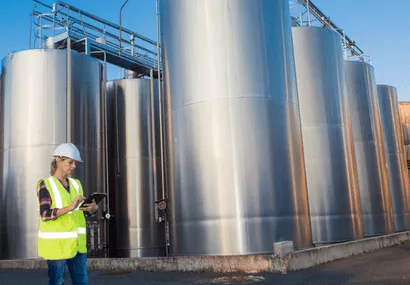
KOSHER Certification in Dubai is closely tied to how food exporters, catering contractors, and ingredient suppliers operate within Dubai’s tightly controlled import-export approval system, where documentation submitted through centralized regulatory channels is continuously cross-verified against supplier records, batch traceability, and production logs before shipment clearance is granted.
B2BCERT provides complete KOSHER Certification services including consulting, gap analysis, training, implementation support, documentation, internal audits, awareness programs, surveillance audits, renewal, registration, and full certification assistance in Dubai.
In Dubai, this becomes more demanding due to the region’s contractor-driven supply chain environment, where businesses are linked to large-scale industrial projects and multi-layer procurement systems. Here, certification is not treated as a symbolic label—it functions as a control mechanism that ensures ingredient segregation, process consistency, and documentation accuracy across repeated export cycles. This is why KOSHER compliance in Dubai directly supports smoother shipment approvals, reduces rejection risks, and strengthens acceptance in international buyer audits.
Is KOSHER Certification in Dubai Mandatory for Export Markets?
Legally, it may not always be required—but commercially, it is often expected.
- Many international buyers include KOSHER as part of supplier qualification
- Retail chains and distributors may reject non-certified products during onboarding
- Export approvals can depend on how well documentation aligns with compliance expectations
What makes Dubai different:
- Export documentation is frequently cross-verified with production and supplier data
- Buyers expect consistency across multiple shipments, not just initial approval
- Delays occur when compliance records do not match declared product details
In Dubai, export approvals are often influenced by how accurately documentation aligns with importer-side verification systems, where inconsistencies between ingredient declarations and supplier records can delay clearance during review stages.
What Do KOSHER Consultants in Dubai Actually Do for Your Business?
Engaging KOSHER Consultants in Dubai is about operational alignment—not just documentation.
They help businesses:
- Review ingredient lists and identify compliance risks
- Verify supplier sources and approval status
- Design production workflows to prevent cross-contamination
- Establish documentation systems aligned with audit expectations
- Train teams to maintain compliance during real-time operations
Local operational challenge:
Facilities handling multiple product lines often face segregation issues. Consultants restructure workflows so compliance is maintained even under high-volume production and shared resource conditions.
KOSHER Audit in Dubai — What to Expect & How to Prepare
A KOSHER Audit in Dubai evaluates how your facility performs in real conditions—not just what is documented.
Audit focus areas:
- Raw material traceability and supplier validation
- Equipment usage and sanitation processes
- Storage separation between compliant and non-compliant materials
- Batch records and production logs
- Staff handling practices during processing
Preparation approach:
- Conduct internal gap assessments before audit
- Ensure supplier documentation is complete and consistent
- Train staff on practical compliance procedures
- Confirm physical segregation is clearly implemented
In Dubai, audit readiness is critical because facilities supplying to contractors or export partners are often subject to repeated verification cycles, where previous audit findings are compared with current production records.
Common issue:
Shared equipment without proper validation remains one of the most frequent audit gaps.
KOSHER Cost in Dubai vs. the ROI It Delivers — Is It Worth It?
Understanding KOSHER Cost in Dubai requires a broader business perspective.
Cost factors include:
- Facility modifications for segregation or process redesign
- Consultant support and audit preparation
- Certification and inspection fees
- Ongoing compliance maintenance
Return on investment:
- Access to export markets with strict buyer requirements
- Faster onboarding with international distributors
- Reduced shipment rejection risks
- Improved credibility in global supply chains
What Are the Steps for KOSHER Registration in Dubai?
The process of KOSHER Registration in Dubai follows a structured path:
- Initial assessment of products and facility setup
- Verification of ingredients and suppliers
- Process alignment for compliance requirements
- Documentation preparation
- Certification audit
- Approval and labeling authorization
End-to-End KOSHER Services in Dubai — From Audit to Certification
Businesses often prefer complete KOSHER Services in Dubai to avoid fragmented execution.
These services typically include:
- Gap analysis and readiness evaluation
- Process redesign and implementation support
- Documentation and record management
- Audit coordination
- Post-certification compliance monitoring
This approach ensures smoother certification timelines and reduces operational disruptions.
Why Is KOSHER Compliance in Dubai Critical for Food Exporters?
For exporters, KOSHER compliance in Dubai directly impacts operational continuity.
- Supports faster approval in international markets
- Aligns with buyer-specific compliance requirements
- Reduces delays caused by documentation mismatches
- Ensures consistency across repeated shipments
This becomes particularly important in Dubai’s export structure, where shipment approvals are part of an ongoing validation cycle tied to supplier history, documentation accuracy, and production consistency.
Why Businesses in Dubai Choose B2BCERT for KOSHER Certification
Organizations choose B2BCERT in KOSHER because the focus is on execution, not just certification.
Key advantages:
- Experience with export-oriented and industrial supply chains
- Practical solutions for real production challenges
- End-to-end support from assessment to certification
- Alignment with international compliance expectations
This is especially important in Dubai, where businesses operate within interconnected supply chains and require consistent compliance across operations.